|
20 May 2026
Newsletter no. 3-2026 from Norecopa
Welcome to Norecopa's third newsletter of 2026. This is the 134th newsletter which we have issued.
We hope you find them of use. We
welcome feedback, positive or negative.
Please share this newsletter with your colleagues and friends, and encourage them
to subscribe!
We are also on
LinkedIn and (to a much lesser extent) on
Facebook.
This newsletter contains the following items (if some links do not appear to work, check that your mail program has opened the whole of the newsletter):
|
|
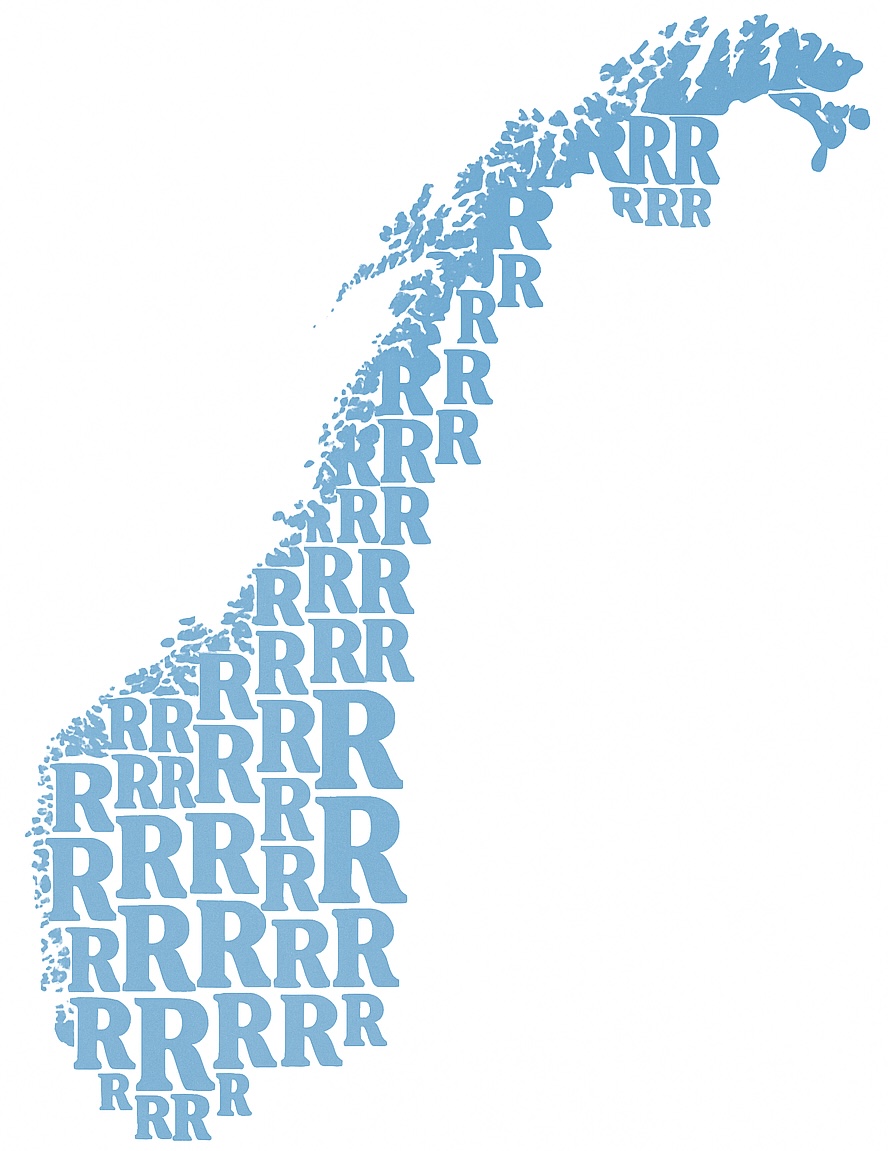
The Norwegian Government has provided 6 million kroner (approx. 550,000 euros) in 2026 to start the work of establishing a national 3R Centre. This year, half of the money will be used by the Norwegian Veterinary Institute, in collaboration with experts in the field, to produce an overview of our knowledge today regarding the 3Rs and the resources available to implement them. The other half will be used by the Norwegian Food Safety Authority (NFSA, Mattilsynet) to start the work of
establishing a Centre.
In 2027, the NFSA will receive 6 million kroner to run the Centre.
The role that Norecopa, and in particular its database, will play in relation to the new Centre is currently under discussion.
Norecopa welcomes this national 3R Centre, which will have the capacity to reach out physically to Norway's 80 research animal facilities, in close collaboration with the NFSA's existing research animal team.
There is more information in Norwegian (with
links to the relevant documents) in
the section at the end of this newsletter.
|
|
Norecopa's secretary is co-author of two papers that have been published since the last newsletter:
•
What's in a NAM? This paper addresses the confusion in nomenclature surrounding non-animal research and testing (two areas where there are very different potentials for replacing animal use). The term NAM (New Approach Methodologies) is used in a variety of ways. This paper proposes that it is defined as
species-specific methodologies, not including the use of living animals. If the target species is human, this simple definition implies that working with experimental animals as a model never qualifies as a NAM. Real-life examples are discussed. Many papers have been published recently about the acronyms that are in use - Norecopa has put together a
webpage about NAMs and NATs with links to these papers.
• Building Bridges: Involvement of animal care staff and laboratory technicians in experimental planning and conduct of animal studies for better job satisfaction and science. This paper presents the results of a questionaire to 850 animal care staff and laboratory technicians about their involvement in scientific planning and conduct. Greater involvement of these in planning and conducting studies would improve their
understanding of how experiments are done, their work satisfaction, animal welfare, and scientific quality. We provide recommendations to improve their engagement in animal research.
The response to our 2026 webinar series, in collaboration with Rafael Frías of
R3FINED International, continues to be overwhelming, with the limit of 1,000 registrants being reached each time. These receive a link to the recording, in case they cannot be present on the day. Recordings are not available for others, so we recommend early booking.
More information about the webinars
is available here. The next event is a presentation by Professor Paul Flecknell tomorrow, who will speak on
Anaesthesia and Analgesia in Laboratory Animals: When Will Best Practice Become Standard?
Since the last newsletter on 16 March, Norecopa's Secretary has served on the Scientific Committee of the
Austrian 3R Days and presented at the congress which was held in Vienna in April, with 280 participants, 65 speakers and 50 poster presentations. His own presentation gave
Practical advice on improving quality, safety and translatability in animal facilities.
He also held the keynote presentation in Homburg, Saarland, when the German Ministry awarded their Research Prize on 24 April, International Laboratory Animal Day, at the annual
Homburg Colloqium. He was asked to present
An overview of Norecopa's global 3R resources.
Norecopa's
19th Annual Meeting and scientific seminar will be arranged as a hybrid event on Thursday 11 June. There will be four English-language presentations in addition to the Annual Meeting itself (which will be held in Norwegian). The Zoom link for these is available on the website.
Norecopa's
3R Prize will also be awarded for the 15th time.
|
|
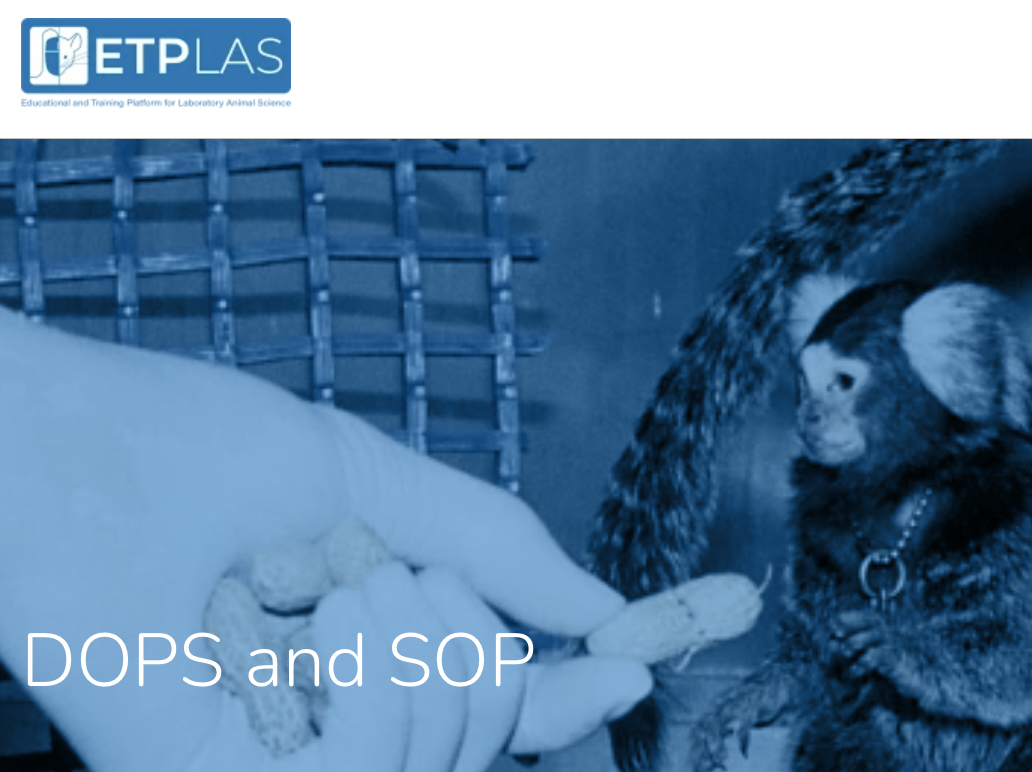
Assessment of practical skills is a key component in ensuring competence in Laboratory Animal Science, particularly for practitioners performing functions A, C and D as defined in the EU Directive 2010/63/EU, namely those who carry out procedures on animals, care for them and perform humane killing, respectively.
A working group appointed by
ETPLAS (Education and Training Platform for Laboratory Animal Science) has developed a set of
Direct Observation of Procedural Skills (DOPS) tools for this purpose.
A great deal of practical information on DOPS and SOPs (Standard Operating Procedures) is available
on the ETPLAS website.
|
|
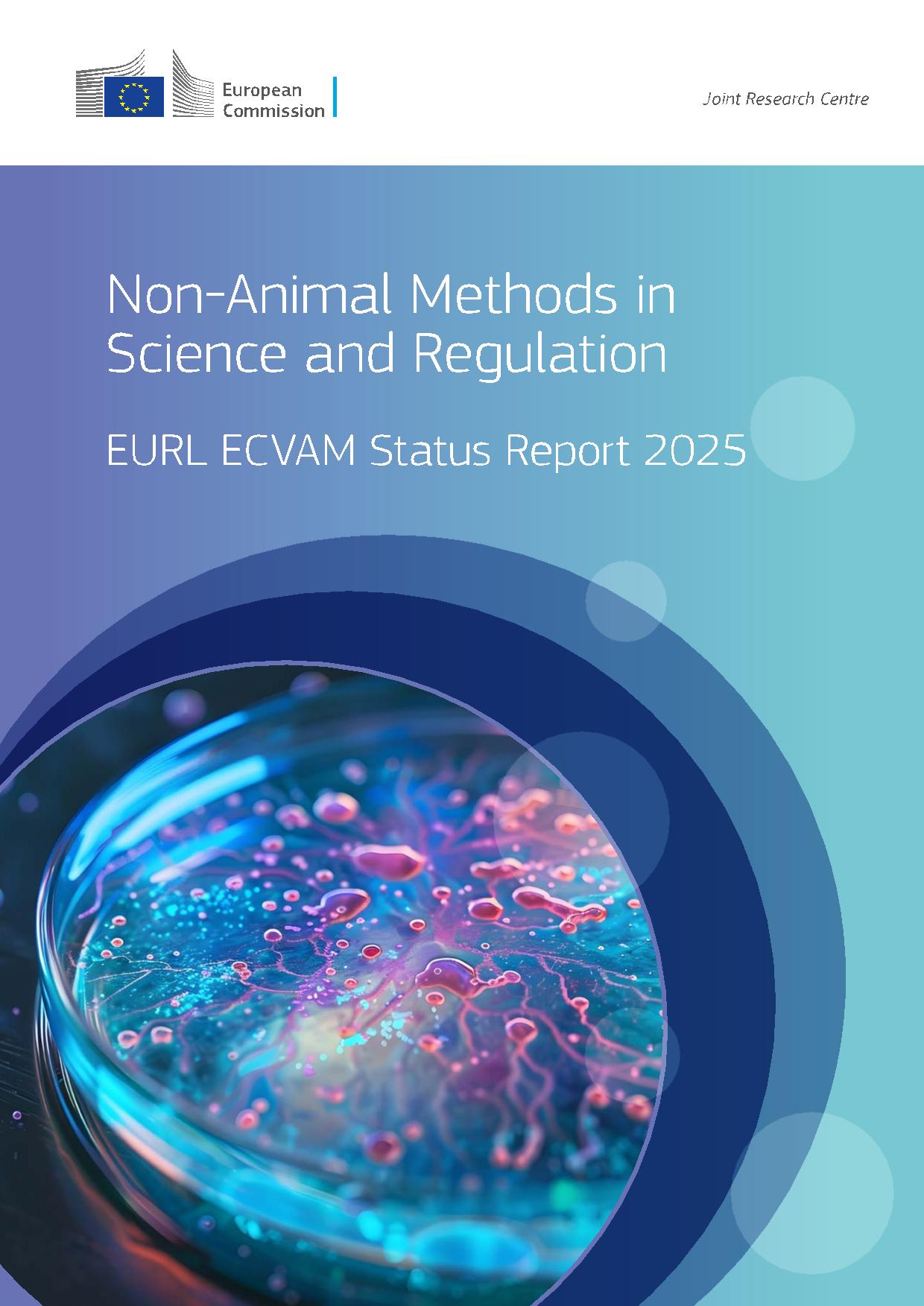
The
2025 EURL ECVAM Status Report presents a comprehensive overview of the European Union Reference Laboratory for Alternatives to Animal Testing (EURL ECVAM) recent advancements in the development, validation, and regulatory integration of non-animal methods, as well as progress made elsewhere.
The
report highlights innovative scientific breakthroughs including organ-on-chip technologies, artificial intelligence, and multi-omics approaches that collectively enhance the predictivity, efficiency, and ethical standards of safety assessment.
With the European Commission preparing to publish a roadmap for phasing out animal testing by 2026, this status report documents scientific, regulatory, societal, and economic progress.
|
|
The EU summary report on statistical information on the use of animals for scientific purposes in 2023 under Directive 2010/63/EU
has been published. The data set for 2023 has also been made available
in ALURES. The downward trend continued with the number of animals (first-time uses) now at 7.97 million (down 4.9% from 2022) and total uses down by 4.7% to 8.08 million.
EU's Reference Laboratory EURL ECVAM, in collaboration with Scientix, has launched a new
learning scenario for secondary school students (ages 14–18). In this activity, students take on professional roles (researcher, safety inspector, or quality assurance inspector) to explore how human cell culture could be used to replace or reduce animal testing in real laboratory settings.
Ewan St. John Smith and colleagues have published
an overview of animal research in the UK, focusing in regulation, implementation, welfare and the development of new approach methodologies.
The UK regulatory authorities are now developing a plan to improve
the protection of decapods when used in science, following legal recognition of their sentience under a 2022 wefare Act.
The UK Animals in Science Committee, which currently reviews project applications on a one-to-one basis, has suggested to the Home Secretary that this should instead
be performed thematically, to increase the impact of their conclusions.
The UK Animals in Science Regulatory Policy Unit has issued
a new Code of Practice with minimum standards for the care and accommodation of regulated animals. The previous version was published in 2014. This new version comes into force on 25 June 2026. References to EU legislation (except where relevant for historical background) have been removed because of Brexit.
The UK Government is also seeking advice from the
Committee on
the establishment of an expert committee on alternatives to animals in science.
David Lewis provides his views on
reduction, and ultimately replacement, of animals in education: focusing on the legislative, ethical and societal drivers for change.
An Editorial in
Nature concludes that
cephalopods deserve higher welfare standards in research.
The Spring issue of
Issues in Science and Technology, published by the US National Academy of Sciences and Arizona State University, has a piece on
What's Missing in Animal Welfare Efforts? The piece discusses the way scientists approach the care and use of animals who breathe water and the protection of their habitats.
Rosa Maria Cajiga and colleagues have
compared animal research governance in Finland and Switzerland. This and a number of other resources on legislation in different countries are available
on Norecopa's website.
How do we avoid over-regulation, outsourcing of animal experiments to countries with weaker standards, and erosion of research quality, while at the same time highlighting opportunities to combine validated NAMs with high-quality in vivo work under robust ethical oversight? A
Strategic Foresight Workshop, under the COST TEATIME Action, has published its discussion.
Data welfare is also animal welfare. Benoit Petit-Demouliere and Damien Huzard describe the building of a WellFAIR research ecosystem. FAIR refers to the principles of
Findability, Accessibility, Interoperability, and Reusability proposed by Wilkinson
et al. in 2016.
Sonja Rumpel and colleagues have studied stress and strain in laboratory animal professionals in German-speaking countries under a title that many will recognise:
Caring, killing and an always busy schedule.
Do we pay enough attention to animals' sensory capacity when designing housing and husbandry systems?
Mal Graham and colleagues discuss this.
UAR Oceania
(Understanding Animal Research) have published a guide for families and young people entitled
Supporting Those Who Care for Research Animals. The guide is intended to help families of animal care staff working in research organisations to understand more about the use of animals in research and its emotional impacts.
Is it appropriate to name individual research animals? Cindy
Buckmaster gives her views on this.
Finally, Peter Eckmann and colleagues have compared
the software tools that are available to check the rigour and transparency of published work.
|
|
Regjeringen publiserte
en pressemelding den 17. april om etablering av et 3R-senter under Mattilsynet, som en oppfølging av
utredningsrapporten fra desember 2025.
Som omtalt i
årets første nyhetsbrev, bevilget Stortinget 6 millioner på 2026-budsjettet for 'å styrke arbeidet med alternativer til dyreforsøk. Bevilgningen kan brukes til realisering av et norsk 3R-senter, dersom det samlet sett gir fornuftig ressursbruk av disse midlene.'
Midlene var tildelt Veterinærinstituttes post for kunnskapsformidling, men de er blitt ompostert. I LMDs
tildelingsbrev
til Veterinærinstituttet står det:
'Som et ledd i oppfølgingen av dyrevelferdsmeldingen tildeles Veterinærinstituttet 3 mill. kroner for 2026. Midlene skal benyttes til en helhetlig kunnskapsoppsummering om alternativer til dyreforsøk og arbeid med 3R i Norge i samarbeid med relevante aktører.' Dette arbeidet, ledet av Arne Flåøyen ved Veterinærinstituttet, er nettopp startet og har en frist til 1. mai 2027.
Skjebnen til de resterende 3 millionene er beskrevet i
Regjeringens
revidert nasjonalbudsjett:
Regjeringen vil etablere et nasjonalt 3R-senter ved Mattilsynets hovedkontor etter tilsvarende modell som i Sverige og Danmark, og at det føres hyppigere tilsyn med forsøksdyrvirksomhetene. Når 3R-senteret er etablert, avvikles den statlige støtten til Norecopa som i dag finansieres av Veterinærinstituttets budsjett på kap. 1135,
ettersom at Norecopas oppgaver videreføres
gjennom 3R-senteret. I statsbudsjettet for 2026 ble det i budsjettforliket på Stortinget besluttet å øke bevilgningen til arbeidet med alternativer til dyreforsøk med 6,0 mill. kroner. Midlene ble da plassert på budsjettkapittelet til Veterinærinstituttet. Det foreslås at 3,0 mill. kroner overføres til Mattilsynet, og at Veterinærinstituttet i 2026 beholder 3,0 mill. kroner for å lage en kunnskapsoppsummering knyttet til dyreforsøk.
Det foreslås
å redusere bevilgningen med 3,0 mill. kroner (til Veterinærinstituttet, red.anm.) mot en tilsvarende økning på kap. 1115, post 1 (Mattilsynet, red.anm.).
De resterende 3 millionene er altså tildelt Mattilsynet for å starte etableringen av et 3R-senter. Det foregår en konstruktiv dialog mellom Norecopa og Mattilsynet om Norecopas ressurser, og hvordan de best kan ivaretas.
Revidert nasjonalbudsjett
skal etter planen vedtas 19. juni.
Andre saker:
Mattilsynet
varsler en endring i Forskriften om bruk av dyr i forsøk for å tilpasse den til endringene i to vedlegg til EUs forsøksdyrdirektiv (vedlegg III om krav til virksomheter og til stell og oppstalling av dyr, og vedlegg IV om metoder for avliving av dyr).
Eventuelle innspill må sendes til Mattilsynet
innen 1. juni.
Forsøksdyrkomitéen har publisert
et sammendrag av nettverksmøtet for de europeiske nasjonale komitéene som ble holdt i Brussels i mars, med lenker til oversikter over prosjekter og veiledninger som de har utgitt.
Komitéen har også publisert et sammendrag av
seminaret for dyrevelferdsenhetene som ble holdt på Gardermoen i november i fjor. Seminaret fokuserte på R'en Replacement. Adrian Smith ga en kort oversikt over
ressursene på Norecopas nettsider som har med erstatning av dyreforsøk å gjøre.
Mattilsynet har publisert sine
hovedprioriteringer for tilsyn med akvakultur i 2026.
|
|
In addition to these items, Norecopa offers a newsfeed on animal research and testing from European media.
As mentioned in the footer below, Norecopa does not necessarily subscribe to the opinions expressed by others in these newsletters.
|
•
|
|
|
•
|
|
|
•
|
|
|
•
|
|
|
•
|
|
|
•
|
|
|
•
|
|
|
•
|
|
|
•
|
|
|
•
|
|
|
•
|
|
|
•
|
|
|
•
|
|
|
•
|
|
|
•
|
|
|
•
|
|
|
•
|
|
|
•
|
|
|
|
Please help us in this task by forwarding this newsletter to friends and colleagues who may wish to subscribe. The white box at the bottom right of every page on Norecopa's website, or this link can be used.
|
|
|
Earlier editions of Norecopa's newsletter can be read here. They were published in Norwegian up to no. 2-2017. Free text searches on
Norecopa's website will also find resources which we have described in newsletters.
Mention in these newsletters of an institution, publication, professional service or opinion on animal research and testing does not necessarily mean that Norecopa endorses the activity or opinion. Norecopa and its staff are not involved, financially or otherwise, in the external activities mentioned here, unless this is explicitly
stated.
|
|
Content:
Norecopa
Editor:
Adrian Smith
Org.no. 992 199 199
Bank account: 2801.53.03931
Vipps: 889149
All photographs in the newsletters have been taken by Norecopa or from
colourbox.com, unless otherwise specified.
You can read about
Norecopa's data protection and privacy policy here.
In compliance with the EU Data Protection Regulation (GDPR), Norecopa updated its personal data and privacy policy in 2018.
You can read about this here.
|
|
|